How agave is transformed into mezcal in San Dionisio Ocotepec, Oaxaca
San Dionisio Ocotepec and its role in the mezcal tradition
Mezcal is a spirit whose identity is deeply tied to the land where it is produced. In the case of Bendito Eres, its production takes place in San Dionisio Ocotepec, Oaxaca, a locality considered part of the historic areas included within the Mezcal Denomination of Origin. This region stands out for preserving traditional techniques in artisanal palenques, where knowledge is passed down from generation to generation.El mezcal es un destilado cuya identidad está profundamente ligada al territorio donde se produce. En el caso de Bendito Eres, su elaboración tiene lugar en San Dionisio Ocotepec, Oaxaca, una localidad considerada parte de las zonas históricas incluidas dentro de la Denominación de Origen Mezcal. Esta región destaca por la preservación de técnicas tradicionales en palenques artesanales, donde el conocimiento se transmite de generación en generación.
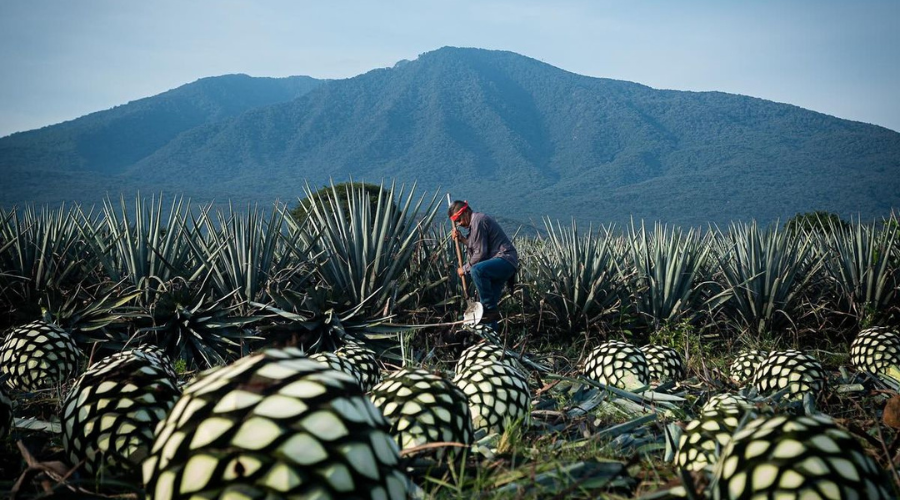
Agave as the essential raw material
Every quality mezcal begins with the proper maturation of the agave. Depending on the species, the growing cycle can extend for more than a decade. Reaching the optimal point of maturity is essential to ensure an adequate concentration of sugars, which directly impacts fermentation and the structure of the final distillate.
Jimado and preparation prior to cooking
Once mature, the agave is harvested through jimado, removing the leaves to leave only the heart, or piña. This stage requires great precision, as an incorrect cut can introduce undesirable flavours. The resulting piñas are then transported to the palenque, where the technical transformation of the agave begins.
Traditional cooking in stone ovens
The cooking process takes place in stone ovens dug into the ground and lined with volcanic rock, heated with firewood. Over several days, the slow heat converts the agave’s starches into fermentable sugars and develops the aromatic compounds that give artisanal mezcal its distinctive smoky profile.
Milling using traditional methods
After cooking, the agave hearts are usually crushed using a stone tahona, a system that allows the agave juices to be extracted without completely breaking down the fibre. This method encourages a richer, more complex must, adding texture and depth to the final result.
Spontaneous fermentation in wooden vats
The must is placed in wooden vats, where it ferments naturally thanks to ambient yeasts. This process, shaped by the climate and the local microbiota of San Dionisio Ocotepec, is key to the aromatic development of mezcal.
Distillation in copper stills
Once fermented, the liquid is distilled in copper stills, usually through two distillations. This step refines the distillate and defines its balance between alcoholic strength and aromatic expression, always guided by the master mezcalero.
Resting and bottling
Many artisanal mezcals are rested in glass before bottling, avoiding the use of barrels in order to preserve the original character of the agave. This resting period stabilises the distillate without altering its profile.

Tradición y origen como sello de identidad
The artisanal process and its origin in San Dionisio Ocotepec place Bendito Eres within a movement that prioritises respect for technique and territory, offering an authentic mezcal that remains true to Oaxacan tradition.